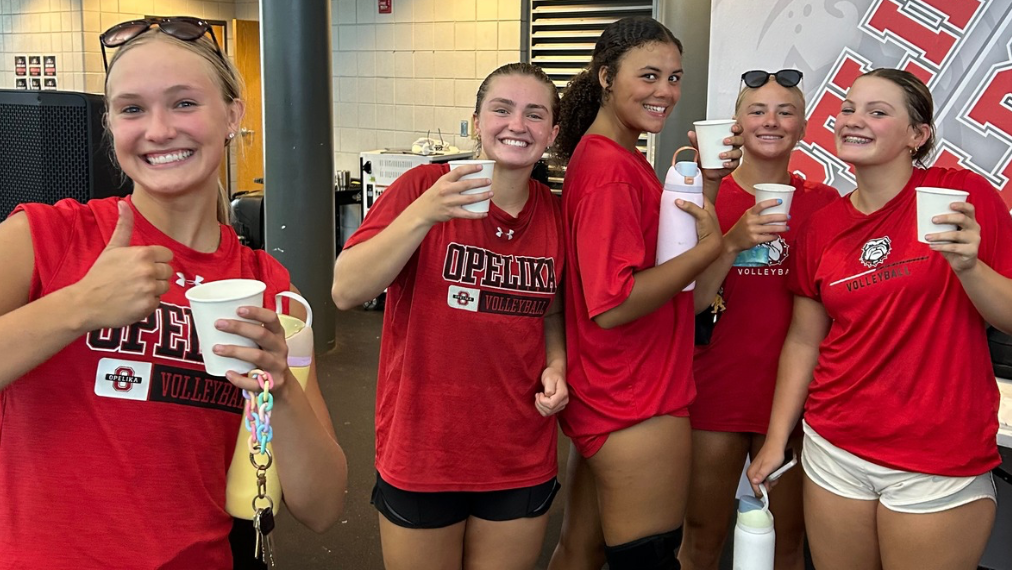

The Shake After The Work.
The last rep shouldn't be the end of the plan. Critical Reload helps schools make recovery a consistent part of what happens next— instead of leaving it to chance once athletes walk out of the weight room.
For coaches, this is bigger than handing out a shake. It's knowing that when your athletes finish training, you've already thought about what their bodies need next.
Training Ends. Recovery Begins.
A repeatable recovery option, available where athletes train, delivered as part of the routine rather than left to memory, convenience, or chance.
Critical Reload isn't just a shake. It's one part of a system that helps schools make fueling, recovery, and education easier to repeat.
The Work Ends. The Day Doesn't.
Athletes rarely finish training and head straight to a complete meal. They head to class, practice, meetings, the bus, another sport, or home. That transition is where a good recovery plan can quickly become “I'll eat later.”
For some athletes, the last meaningful meal may have happened hours ago.
The athlete trains, sweats, and adds another demand to an already busy day.
This is where recovery often depends on memory, access, transportation, or whatever food happens to be available.
The day keeps moving whether the athlete has refueled or not.
Dinner matters. But it may still be hours away from the end of training.
Don't Leave The Next Step To Chance.
Coaches already plan the warm-up, the lift, the sets, the reps, the rest periods, and the progression. Recovery can be planned with the same intentionality.
The goal isn't to pretend a shake replaces meals or solves an athlete's entire nutrition day. The goal is much more practical: give athletes a reliable recovery option at the exact moment the school still has access to them.
Time
Athletes often have somewhere else to be immediately after training.
Access
A good recovery choice only works if the athlete can actually get it.
Consistency
When recovery depends on remembering, packing, buying, or improvising, it becomes difficult to repeat.
The opportunity is not to make nutrition perfect.
Make Recovery Easier To Repeat.What Happens Repeatedly Becomes Part Of The Culture.
One shake after one workout is nutrition. Do it consistently, in the same place, with the same team, after the same work, and it starts becoming something else: part of the way your program takes care of athletes.
You're Not Just Providing Recovery. You're Building A Habit Around It.
Athletes don't need recovery to feel like another assignment. It can simply become the next part of training: finish the lift, grab a shake, talk with teammates, and move on to what comes next.
Over time, that repeated moment communicates something important: recovery matters here—and the program has already made it easier to do.
Product
A recovery shake available after training.
Function
Convenient carbohydrate and protein when the athlete needs an easy next step.
Behavior
Recovery happens as part of the routine instead of depending on chance.
Culture
“Around here, we take care of athletes.”
Memory
“Remember those shakes Coach had for us after lifts?”
The Shake Becomes Attached To The Experience.
The lift ends. Athletes are tired. Someone is talking about a PR.
Someone else is complaining about the last set.
Coach checks in. Teammates laugh. Everybody grabs recovery before
heading to class, practice, or home.
Repeat that enough times and
the shake isn't just something they drank.
It becomes part of what they remember about being on the team.
Culture is often built through small things repeated consistently.
Around Here, We Take Care Of Athletes.Carbohydrate + Protein. One Practical Job.
Critical Reload is designed to give athletes a simple source of carbohydrate and protein after training when a full meal may not be immediately available.
Help Bridge The Gap Between Training And The Next Meal.
The goal is not to replace lunch, dinner, or the rest of an athlete's normal eating pattern. The shake gives the athlete a practical next step when the workout is over but the day is still moving.
That may mean practice is next. It may mean class, a bus ride, another sport, or a long drive home. Critical Reload gives the program a consistent recovery option that can be available right where training happens.
Help Replenish Fuel.
Training uses carbohydrate as a major fuel source. Including carbohydrate after the work helps begin putting fuel back in for what comes next.
Support Repair And Recovery.
Protein provides amino acids the body can use as part of the repair and adaptation process following training.
A Practical Recovery Option.
A convenient way for a school to provide carbohydrate + protein in a repeatable post-training routine when athletes may not be eating a full meal right away.
A Replacement For A Complete Diet.
Critical Reload does not eliminate the need for meals, snacks, hydration, sleep, or good daily fueling habits. It solves one specific moment inside a much larger system.
Take A Deeper Look At Recovery Nutrition.
Want more detail on how carbohydrate, protein, and recovery fit together? Explore the full Critical Reload recovery article for a deeper explanation of the science behind post-training fueling.
It doesn't have to solve the entire nutrition day.
It Just Needs To Make The Next Step Easier.Critical Reload Means Something Different Depending On Where You Stand.
The recovery shake is the same. The reason it matters changes with the person experiencing it. Choose the perspective that fits you.
Build Recovery Into The Program.
Control the timing, access, and environment so recovery becomes part of what your athletes consistently do after training.
Know Someone Is Looking Out For Your Athlete.
For parents, the shake can mean reassurance: there is support available during the part of the day when fueling often gets difficult.
Make Recovery Part Of What The Team Does.
For athletes, repetition can become belonging: we train together, recover together, and get ready for what's next together.
Different perspectives. Same larger goal: make good recovery behavior easier to understand, access, and repeat.
Yes, But How Does This Actually Work At A School?
You don't need to build the perfect fueling station on day one. Start with the delivery system your staff can run consistently, then scale the routine as participation grows.
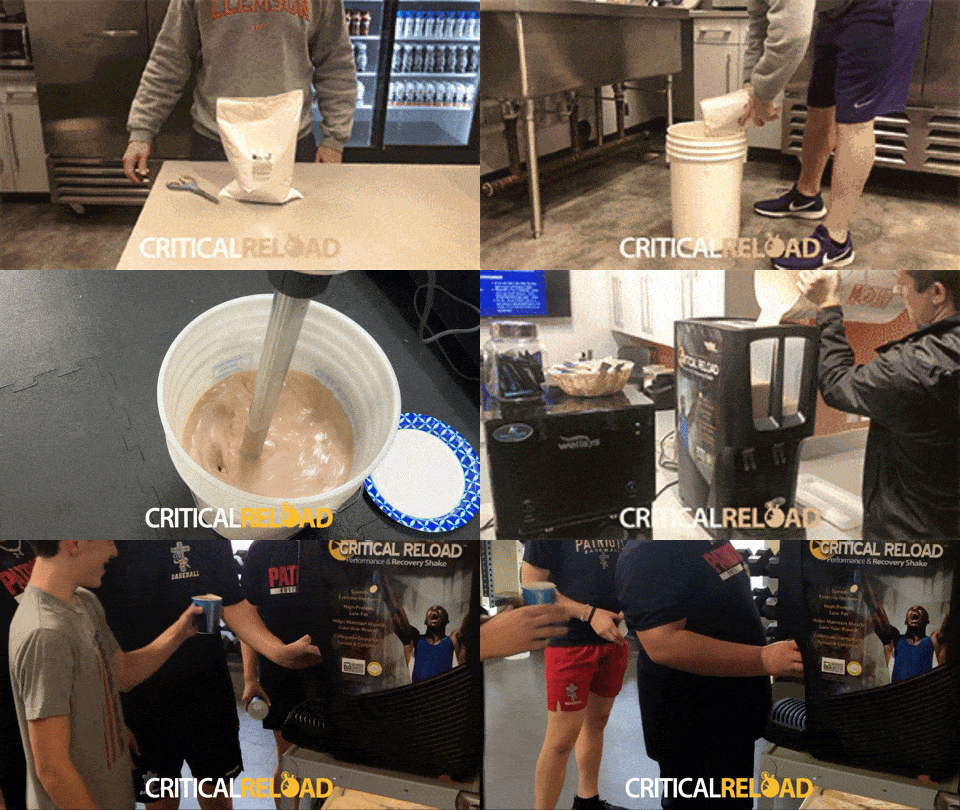
Prepare It. Put It Where Athletes Train. Make Recovery Easy To Access.
The implementation doesn't have to be complicated. Critical Reload can be prepared in volume and positioned where athletes already finish their training. The less friction between the last rep and recovery, the easier the behavior becomes to repeat.
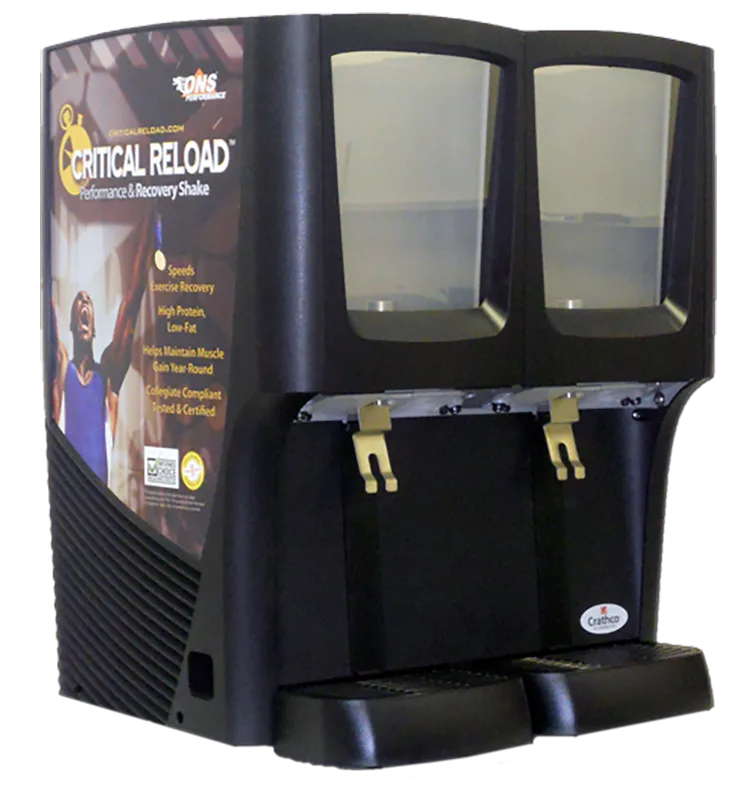
Different Programs Can Deliver Recovery Differently.
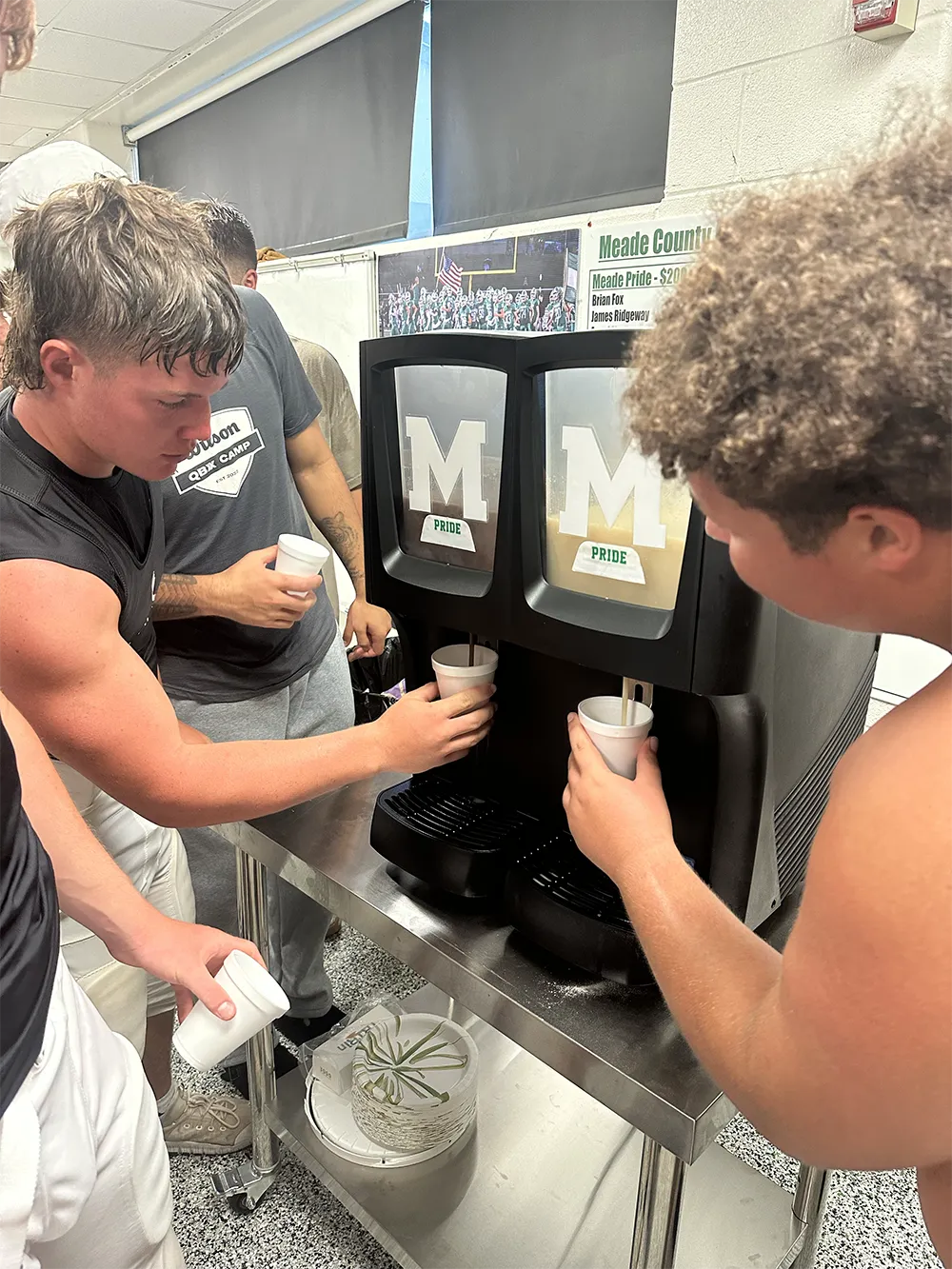
Cold Shake Dispenser.
Our flagship mix-n-serve solution is ideal for large team environments, holding up to 144 servings per blend for efficient high-volume recovery.
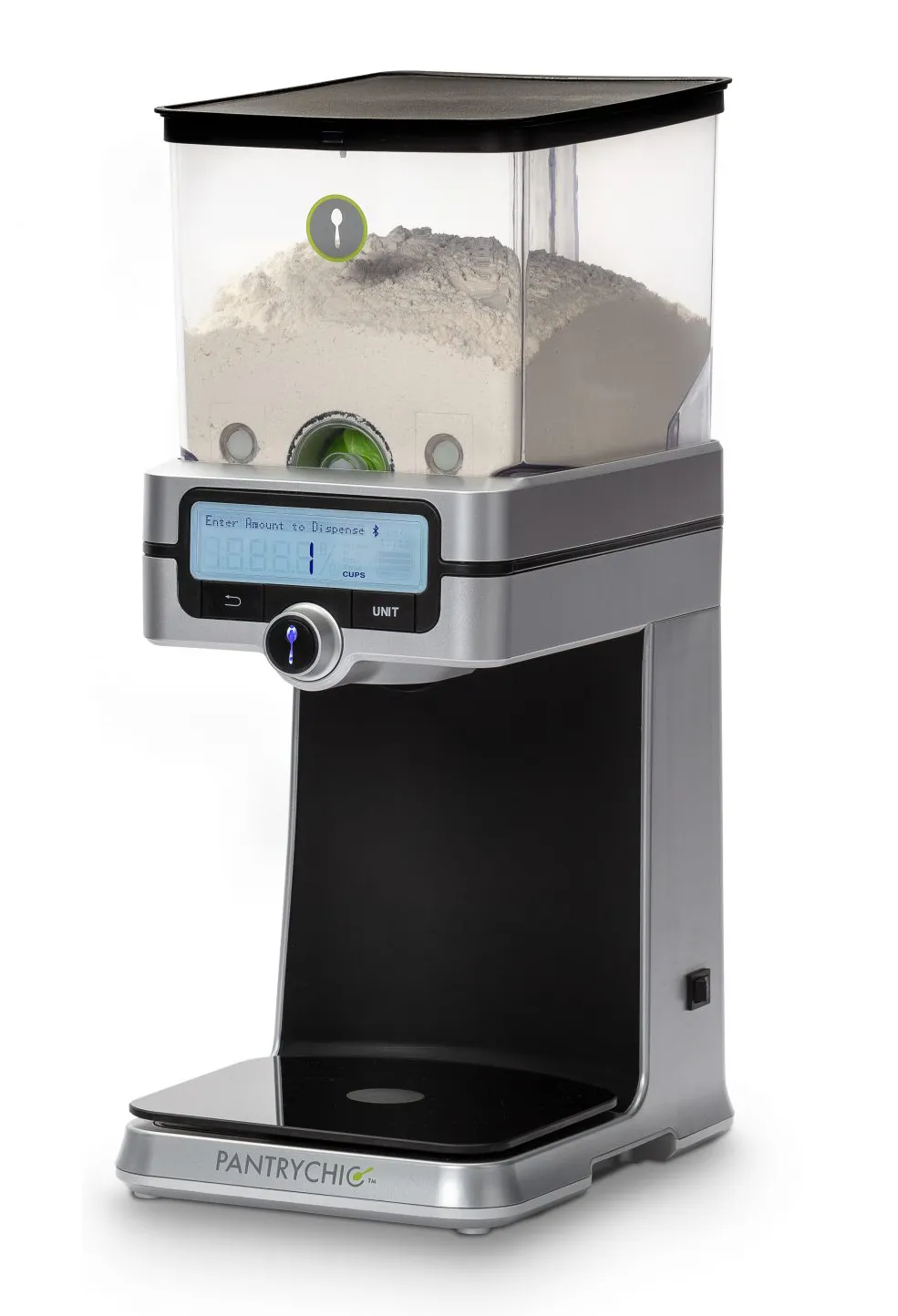
Powder Dispenser.
Ideal for schools with limited water access, smaller batch needs, or programs that want more flexibility in how shakes are prepared and distributed.
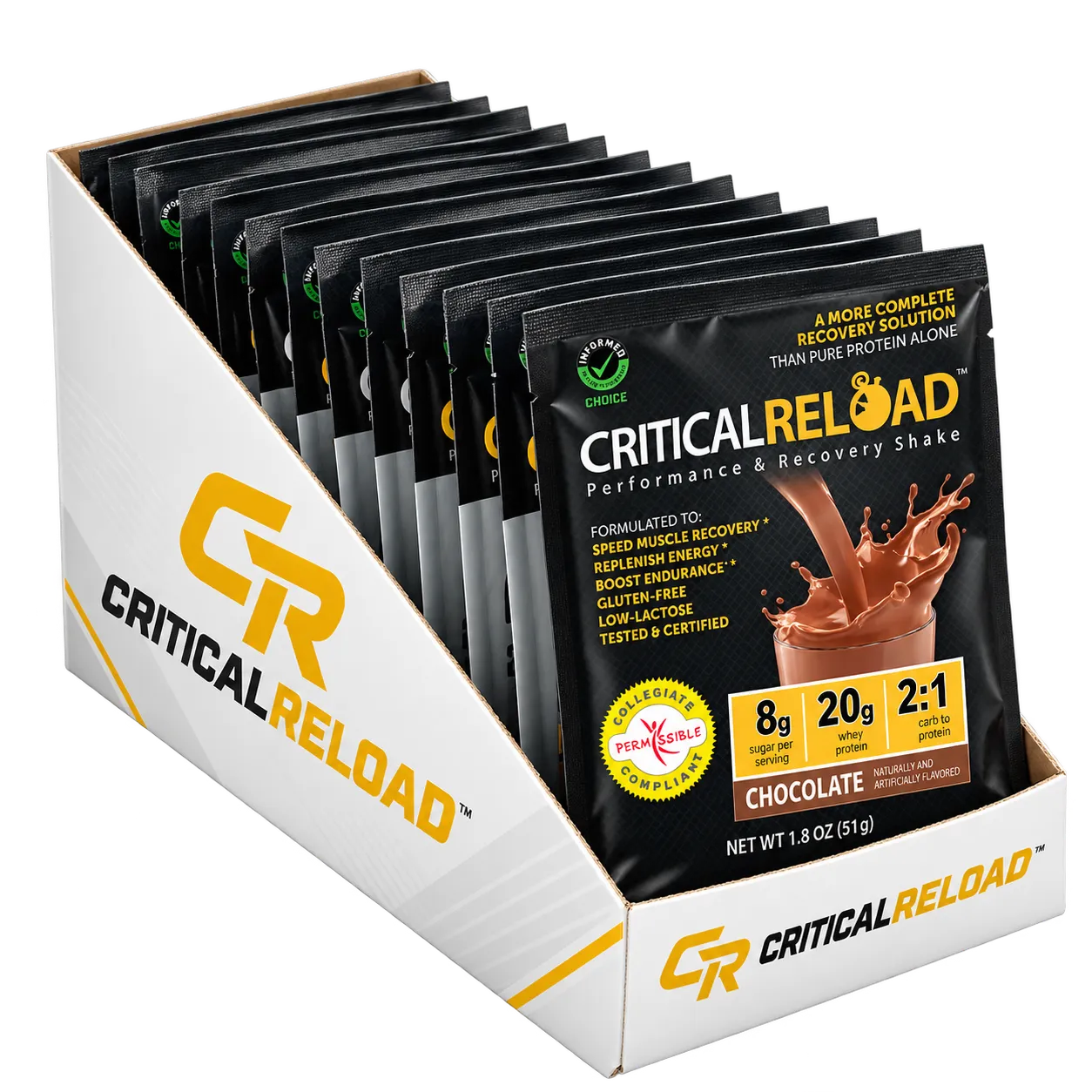
Individual Packets.
Single-serve packets create another option for travel, away contests, smaller groups, or situations where a central dispensing system isn't practical.
This Isn't A Retail Product Waiting On A Shelf.
Critical Reload can live inside the environment where the behavior
actually happens.
The equipment, preparation, timing, and distribution can all be designed
around the school's workflow so
recovery becomes part of the training environment instead of
another responsibility athletes have to figure out on their own.
The Delivery System Isn't The Only Thing That Can Be Flexible.
School Funded
The athletic department or program covers recovery as part of its athlete-support budget.
Booster Funded
Booster organizations can help support access without placing the full cost directly on the athletic department.
Parent Prepay
Families purchase recovery for their own athlete in advance, creating a model that can reduce or eliminate upfront inventory risk for the school.
You don't have to start with the biggest system.
Start With The One You Can Run Consistently.Coaches Are Already Making It Work.
The best proof isn't a product claim. It's hearing from coaches who have had to answer the same questions: Will athletes use it? Can my staff actually run it? And does it fit inside a real school day?
Real School. Real Constraints. Simple Implementation.
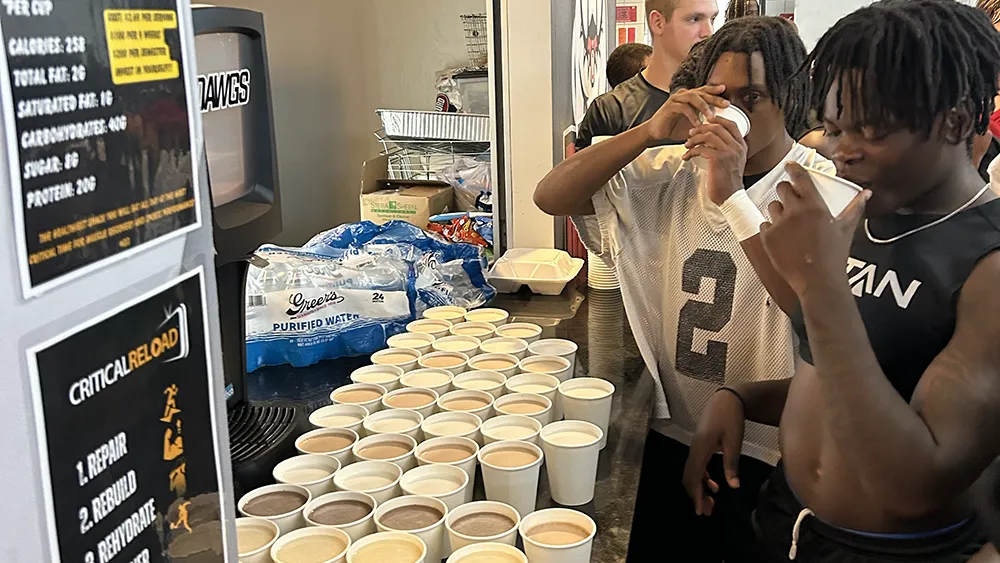
Tobias works with athletes from seventh through twelfth grade who can be on campus from early morning until evening. His concern is practical: how do you make it easier for athletes to get enough food during a long school and training day?
“It's Been Nothing But Simplicity.”
“They can't just eat lunch and that be it.” The problem starts with the reality of the school day.
“Grab the cup… shake, and they're gone.” The system has to work even when class time is limited.
Athlete acceptance matters. Tobias points directly to taste and ease of use as reasons the program works with his students.
Strong Rock has also used the program as a revenue model. Tobias reports averaging about $10,000 per year in program profit.
Coaches See The Value From Different Seats.

Tommy Webb
Athletic Director & Head Football Coach
“Once we started Critical Reload, our athletes could recover faster and go harder more often.”

Kade McGee
Head Strength Coach
“Huge step for our program! Kids loved the taste today!”
The System Has To Survive The Real School Day.
Schools don't operate in ideal conditions.
Coaches have limited time. Athletes move quickly from one obligation
to another. Budgets matter. Taste matters. Staff workload matters.
That is why implementation matters as much as nutrition.
Critical Reload is designed to fit inside the environment
schools already have—not require coaches to create a completely
different one.
The question isn't whether the idea sounds good.
It's Whether It Can Work On A Real Tuesday.Recovery Has To Work For The Athlete — And The Budget.
A recovery system is only sustainable if the financial model makes sense. Critical Reload gives schools multiple ways to provide access— including models where families purchase recovery for their own athlete in advance.
Keep The Math Easy To Understand.
The economics do not need to be complicated. Start with what one serving costs, what a family may pay, and what remains available to support the program.
Typical school cost per serving.
A typical parent-pay price used in the model.
Per serving before applicable processing, shipping, or other program costs.
Small Numbers Become Meaningful When The Routine Repeats.
Here's a simple example using a program with 100 participating athletes receiving recovery five times per week.
Recovery Doesn't Have To Come From One Budget Line.
School Funded
The athletic department or program purchases recovery directly and provides it as part of athlete support. Simple access. Simple administration.
Booster Funded
A booster organization helps cover recovery costs or manages participation through the program's existing support structure.
Parent Prepay
Families purchase recovery for their own athlete before the cycle begins. The school knows participation before product is fulfilled.
Enrollment First. Product Second.
Instead of asking a school to purchase a large amount of inventory and hope families participate, a prepay model can reverse the order: families enroll first, then the program fulfills based on actual participation.
That can reduce upfront financial exposure, give coaches a clearer participation count, and create a more predictable replenishment cycle.
These examples illustrate the structure of the model, not guaranteed earnings. Actual program economics depend on participation, serving frequency, pricing, fulfillment, payment processing, shipping, equipment, and other costs applicable to the school's setup.
The goal isn't to turn recovery into a fundraiser.
The Goal Is To Make Recovery Financially Sustainable.Know What You're Giving Your Athletes.
Coaches should be able to understand more than the front of the package. They should know what the product is, why the ingredients are there, and what stands behind the manufacturing and testing process.
Built Around A Simple Post-Training Purpose.
Critical Reload provides carbohydrate and protein in a form schools can prepare and serve immediately after training.
It isn't designed to replace meals or become an athlete's entire nutrition plan. It is designed to solve one specific recovery moment well.
Nutrition Facts Shouldn't Be Hidden Behind Marketing Copy.
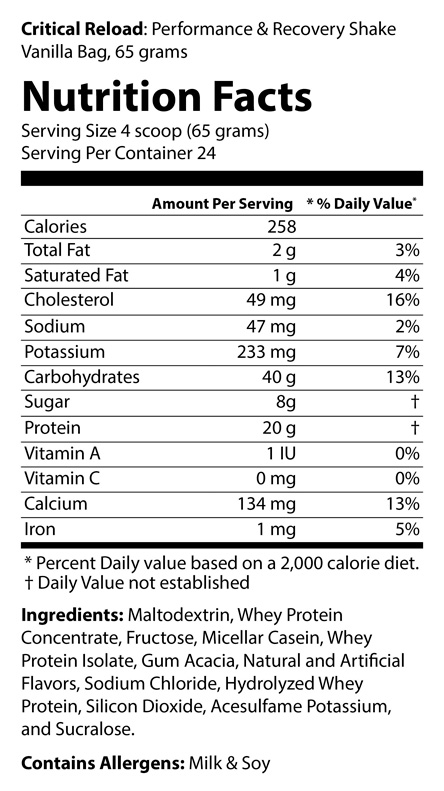
Read The Full Label.
Review serving information, nutrients, ingredients, and allergen information directly from the current Vanilla label.
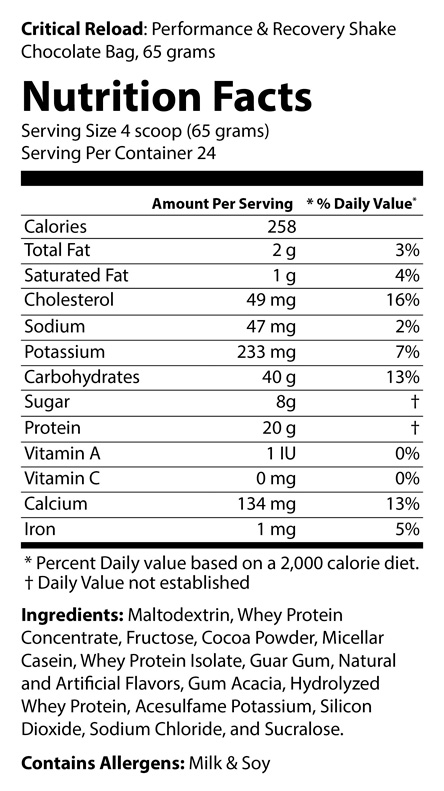
Read The Full Label.
Review serving information, nutrients, ingredients, and allergen information directly from the current Chocolate label.
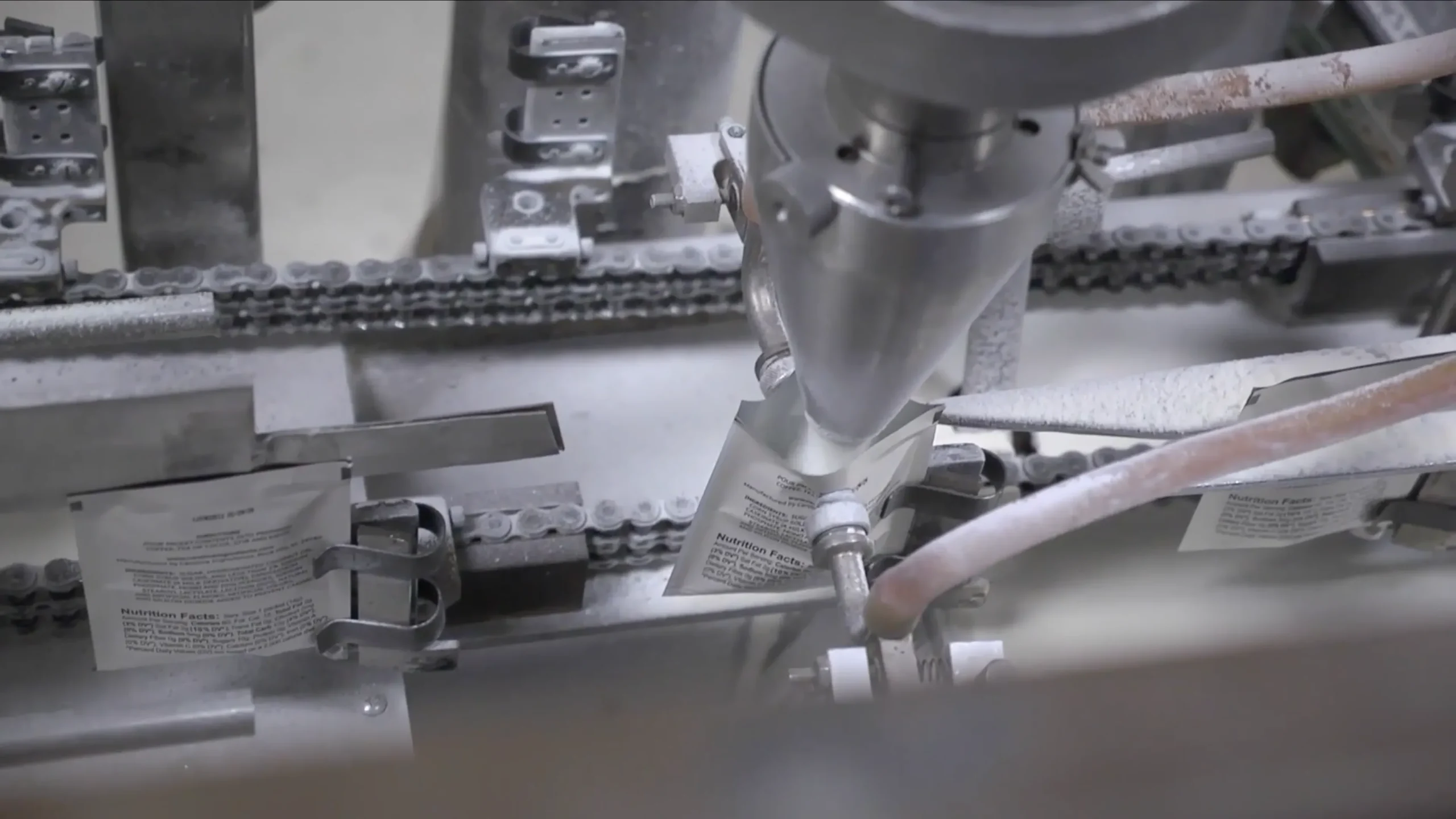
Nothing In The Formula Should Be A Mystery.
If a coach, parent, or athlete wants to know why an ingredient is included, there should be an answer. Critical Reload explains the purpose behind the ingredients in the formula instead of asking people to simply trust the label.
Explore Every Ingredient →The Formula Matters. So Does The Process Behind It.
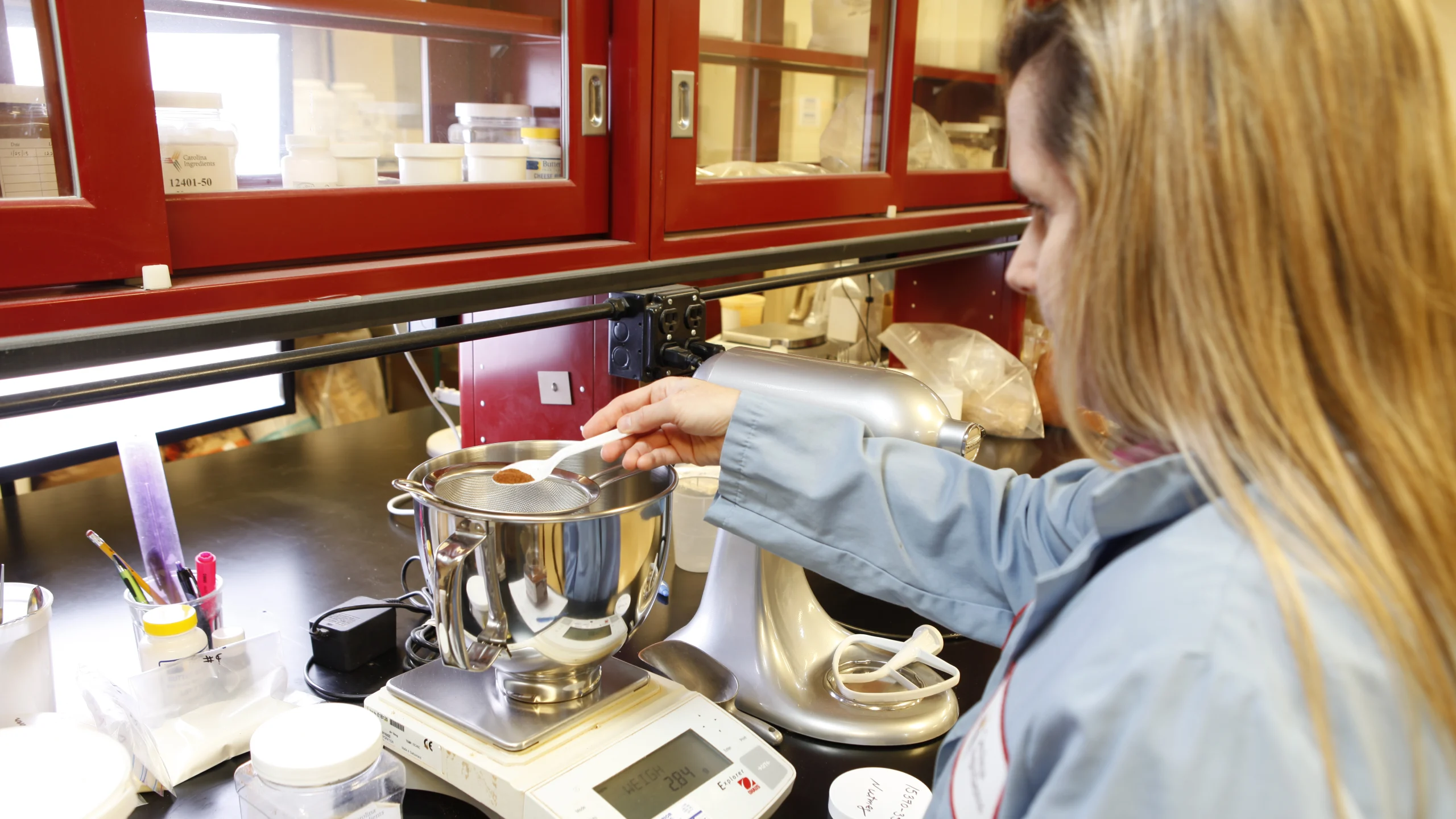
Confidence Beyond The Label.
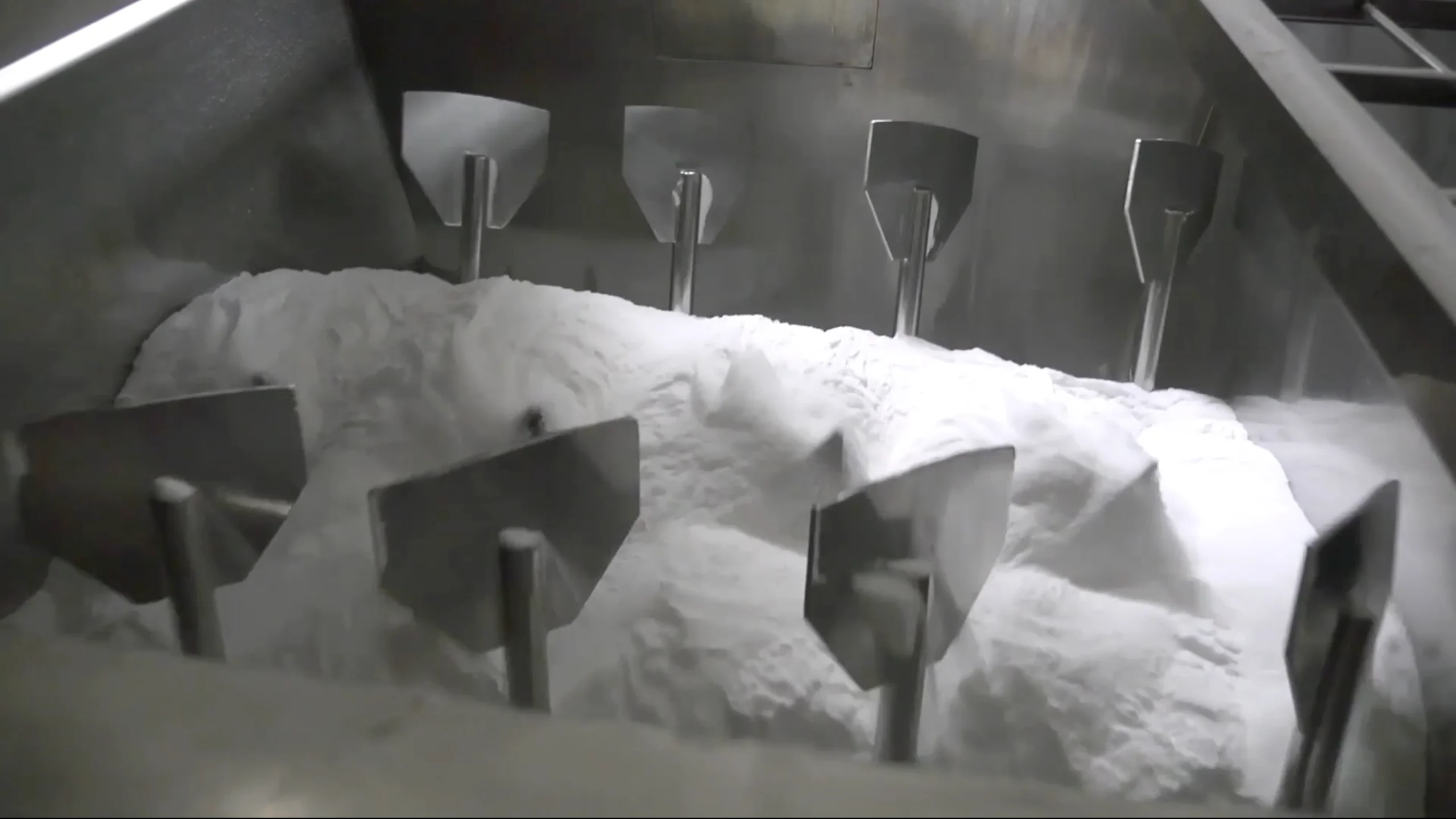
Built Inside A Controlled Food-Manufacturing Process.

Informed Choice
Third-party testing provides another layer of confidence for athletes and programs responsible for what enters the training environment.

Collegiate Compliant
Critical Reload is positioned for use in collegiate athletics in accordance with applicable NCAA guidelines and bylaws.

FDA-Regulated Facility
Critical Reload is made in an FDA-regulated food manufacturing environment—not represented as an FDA-certified or FDA-approved product.

GMP Certified
Manufacturing follows established Good Manufacturing Practice requirements designed to support consistency and quality control.
NCAA is a registered trademark of the National Collegiate Athletic Association. Critical Reload is not endorsed by the NCAA.
You're Responsible For More Than Whether Athletes Like The Taste.
When a product becomes part of the training environment,
coaches and administrators need confidence in more than convenience.
Ingredient transparency, third-party testing, manufacturing standards,
and clear labeling all matter.
The goal is not to ask coaches to become food scientists.
It is to give them enough transparency to make an informed decision.
What goes into the product matters.
So Does Everything Behind It.The Shake Is Not The Nutrition Program.
Giving athletes recovery after training solves an important moment. But the larger opportunity is helping them understand how to fuel the rest of the day when a coach is not standing beside them.
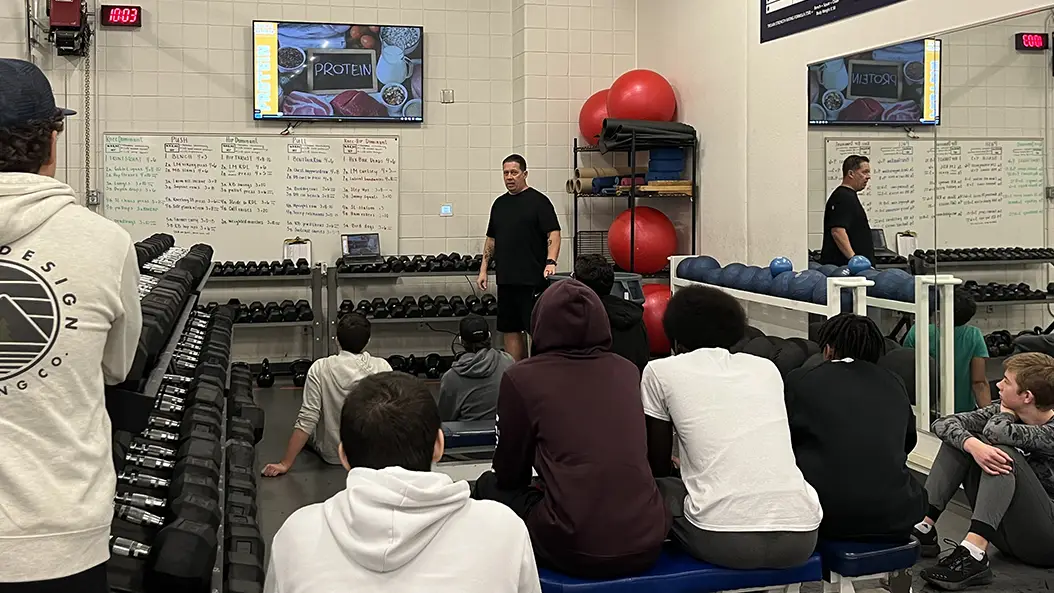
Don't Just Give Athletes Recovery. Teach Them What To Do Next Time.
The shake gives athletes access to a better choice at one critical moment. Education helps them recognize that moment—and others like it—when the environment isn't doing the work for them.
Critical Reload connects education, access, recovery, and reinforcement so better fueling does not depend on a single talk, poster, or product.
Different Problems Need Different Support.
A school nutrition system has to work in more than one place. Some tools teach. Some create access. Some reinforce what athletes are learning when they leave the weight room.
Stream
Short, silent visual lessons keep performance nutrition visible where athletes train—without asking the coach to become a dietitian.
Nutrition Calculator
Gives athletes a simple way to explore estimated fueling needs and connect general nutrition education to their own context.
Fueling Champions
Helps parents turn performance-nutrition ideas into practical groceries, snacks, meals, and routines at home.
Critical Reload
Gives athletes a practical carbohydrate + protein recovery option during the transition when access often becomes difficult.
Talking Points
Gives coaches simple language to reinforce what athletes are seeing without turning every interaction into a nutrition lecture.
Shared Messaging
Podcasts, guides, and parent-facing resources help school and home reinforce the same basic fueling behaviors.
Access Without Education Is Incomplete. Education Without Access Is Frustrating.
You can teach athletes exactly what they should do after training, but if there is nothing available when the workout ends, knowledge alone does not solve the problem.
You can also hand athletes a shake every day without helping them understand where it fits. That solves the moment, but it does less to prepare them for the moments they eventually have to solve themselves.
Make It Visible.
Teach the behavior, create access, and reinforce it inside the training environment.
Practice The Decision.
Learn what to look for, recognize the fueling moment, and build repeatable habits.
Reinforce The System.
Give families practical tools that support what the athlete is learning at school.
The product can solve a moment. The system can teach a behavior.
Don't Just Provide Recovery. Build Understanding.The Questions Coaches Usually Ask Before They Start.
A school recovery program has to make sense nutritionally, operationally, and financially. Here are the practical questions that usually come up first.
Can Your Program Actually Run It?
That's the question underneath most of these FAQs. The goal is not to build the biggest recovery system possible. It's to build one your staff and athletes can repeat consistently.
01 Is Critical Reload supposed to replace a meal?
No. Critical Reload is designed to provide carbohydrate + protein during the post-training transition. It helps solve an important recovery moment, but it does not replace complete meals or the athlete's larger daily nutrition pattern.
02 Do we need a dispenser to start?
No. Schools can begin with a simpler batch-preparation system using a cooler and immersion blender, then move into a dispenser as participation and volume grow.
Start with the system you can operate consistently.
03 How quickly can athletes get their shake after training?
The delivery system is designed around speed and access. In a well-organized setup, athletes can finish training, grab their serving, and move on to class, practice, or the next part of their day without creating a long distribution process.
04 Who pays for the program?
Schools use different models. The athletic department can fund recovery directly, booster organizations can support it, or families can purchase recovery for their own athlete through a parent-prepay model.
The right model depends on the school's budget, participation goals, and administrative preference.
05 What does one serving typically cost the school?
A typical school cost discussed in the current model is $1.99 per serving. Actual program economics can vary based on fulfillment, equipment, shipping, payment processing, and the structure your school chooses.
06 How does parent prepay work?
Families enroll and purchase recovery for their athlete before the program cycle begins. That gives the school a clearer participation count before product is fulfilled and can reduce the need for the program to purchase speculative inventory upfront.
07 Is Critical Reload third-party tested?
Critical Reload carries Informed Choice certification, adding a third-party testing layer for athletes, coaches, parents, and programs that care about what enters the training environment.
08 Is Critical Reload appropriate for collegiate athletics?
Critical Reload is positioned as Collegiate Compliant in accordance with applicable NCAA guidelines and bylaws.
NCAA is a registered trademark of the National Collegiate Athletic Association. Critical Reload is not endorsed by the NCAA.
09 Where is Critical Reload manufactured?
Critical Reload is made in an FDA-regulated food manufacturing facility operating under GMP manufacturing standards.
FDA regulation should not be confused with FDA approval or certification of the finished product.
10 Can I see exactly what ingredients are in the formula and why?
Yes. Critical Reload provides a deeper ingredient-by-ingredient explanation so coaches, parents, and athletes can understand why individual ingredients are included.
11 Does the shake replace nutrition education?
No—and that distinction is central to the Critical Reload model. The shake gives athletes access at a critical moment. Education helps them understand what to do when that system is not standing beside them.
Product solves the moment. Education helps build the behavior.
12 What if we want to start small?
That's often the best way to start. A school can begin with a smaller group, one training block, a simpler delivery method, or a defined prepay cycle.
Prove the routine first. Scale the system second.
Still trying to determine what fits your school?
Start With The System You Can Run.Make Recovery Part Of The Way Your Program Operates.
You don't need to have every detail figured out before you start. Tell us how your program currently operates, and we'll help you identify the simplest way to build recovery into it.
Take The School Fit Survey
Answer a few practical questions about your athletes, schedule, current setup, funding, and delivery needs. We'll use that information to help identify the best starting point.
- Tell us how many athletes you want to serve.
- Share how your training day currently operates.
- Identify funding and delivery options that may fit.
A few practical questions. No commitment required.
School Recovery Program Review
Already have questions about implementation, equipment, parent prepay, participation, or how Critical Reload could fit your school? Pick a time and let's walk through it together.
- Review your current training and recovery setup.
- Talk through equipment and implementation options.
- Build a realistic starting point for your school.
Choose a time that works for you.
No pressure to build the entire system at once.
Start With The Part Your Program Can Run Consistently.