



Female athletes face challenges of balancing training, competition, and their special physiological requirements. Nutrition becomes an important factor in optimizing performance, preventing injuries and ensuring the long-term health of female athletes. However, optimal nutrition is more than just eating healthy; it is important to align the energy consumed with the training requirements. Let us learn more about female athlete nutrition in this guide so that you can better understand the basics and curate a plan that works best for you. Ready? Keep reading!
Female Sports Nutrition: What Benefits Does a Good Nutrition Plan Offer?
Understanding female athlete nutrition is important because sport participation poses unique demands on a woman’s body. Here’s how nutrition helps these athletes:
- Offers Energy to the Body: Female athletes have higher energy demands than average individuals. If their intake is inadequate, it can impair their performance and lead to fatigue, injury risk, and relative energy deficiency in sport (REDs).
- Supports Hydration and Temperature Regulation: Hydration is an integral part of women sports nutrition because it regulates the body’s temperature. During outdoor competitions, athletes lose fluids faster due to sweating, which makes proper hydration even more essential.
- Improved Healing: Aggressive training and competition put a strain on muscles, often causing micro-damage. With adequate nutrition, specifically protein-rich meals, it is possible to support tissue repair and muscle growth.
- Supports Healthy Weight Management: Body weight is very crucial in some sports, and nutrition influences it greatly. A balanced, expert-guided female athlete diet helps athletes manage their weight safely without compromising on health or performance.
- Promotes Overall Well-Being: Adequate nutrition is also essential for the physical and mental well-being of athletes. Thus, they can stay healthy, recover well, and reduce the likelihood of illness, which may lead to training interruptions and performance decline.
Essential Micronutrients in Female Sports Nutrition
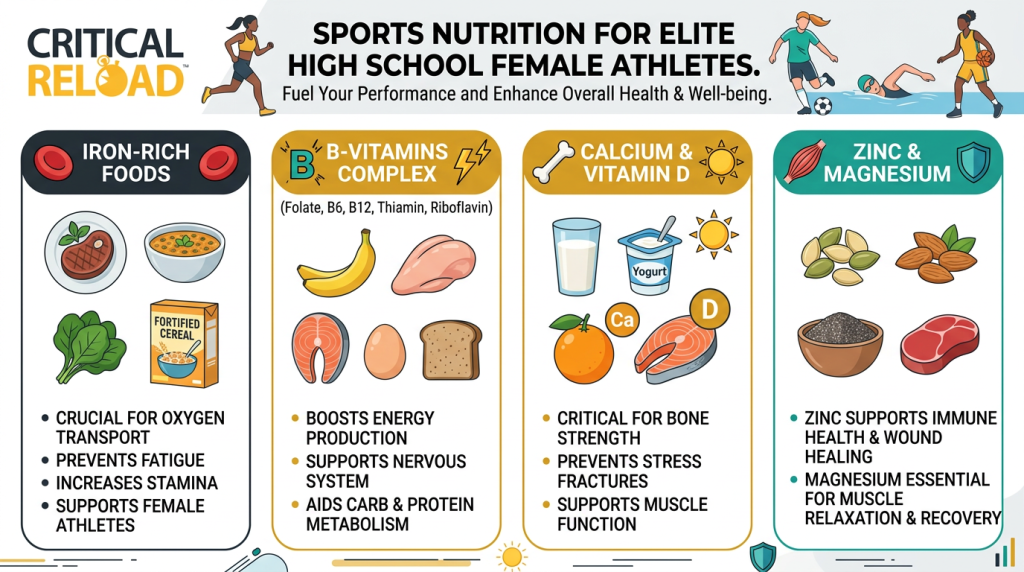
Having the right micronutrient intake is essential for females, especially active women athletes. Some micronutrients that should not be missed are:
- Iron: Iron is known to support oxygen transport and energy metabolism. Iron deficiency in female athletes may lead to extreme fatigue and loss of endurance.
- B-Vitamins (Folate, B6, B12, Thiamin, Riboflavin): B-Vitamins boost the production of red blood cells and improve energy metabolism. Deficiency can lead to slower recovery and loss of focus.
- Calcium and Vitamin D: Vital for stronger bones and optimal muscle function, especially for athletes who train indoors or don’t consume dairy products.
- Zinc and Magnesium: Improve immunity, facilitate muscle repair, and support wound healing. If the diet is based on processed foods, a deficiency of these can be observed.
Female Athlete Nutrition Checklist: What to Eat Before and During Competitions
The foundation of sports nutrition for female athletes are the macronutrients, which include carbs, proteins, and fats. Balancing these correctly is crucial for proper nourishment. Here’s a quick women sports nutrition checklist that will help you:
- Female athlete diet weeks before the competition:
- 60% carbohydrates
- 20% protein
- 20% fat
- Plenty of fluids
- Female sports nutrition 24-48 hours before the competition:
- Similar to a training diet
- Carb-loading (only for specific competitions)
- Plenty of fluids
- Female athlete nutrition 3-4 hours before the competition:
- Carbohydrates (50%)
- Lean protein
- Colorful fruits and vegetables (25%)
- Plenty of fluids
- Female athlete diet 30-60 minutes before the competition:
- A small snack (an immediate source of energy)
- Women sports nutrition during the competition:
- A quick snack
- Lots of fluids
Hormones and Athletic Performance: Understanding How Female Bodies are Different
The key difference between female and male athletes lies in sex hormones, which influence metabolism and performance significantly. Hormonal fluctuations throughout the menstrual cycle can affect energy levels, inflammation, recovery, and micronutrient needs. The interlinking between hormones and athletic performance is especially known to affect females whose cycles are irregular or heavy. Based on the hormonal changes, the nutritional plan may need adjustments to support performance and overall health throughout this phase.
Unique Nutritional Challenges Faced by Female Athletes
Female athletes are often faced with unique challenges when it comes to striking a balance between their nutritional needs and energy availability (EA). However, many athletes fail to reach this balance. When the EA is low, the following things can happen:
- Impact on Menstrual Cycle: Low EA can lead to fluctuations in the estrogen levels, which in turn cause irregular menstrual cycles.
- Impact on Bone Health: When a lack of energy affects estrogen levels, bones also become weaker. This may lead to conditions like stress fractures, osteopenia, and osteoporosis in women.
- Impact on Weight: Disordered eating or inadequate energy input is also known to affect weight.
To tackle these challenges, proper nutrition is crucial.
Conclusion
That brings us to the end of this guide, where we tried to understand sports nutrition for females. However, female athlete nutrition is a dynamic concept, which means there are no rigid rules about what to do and what not to do. It is more about understanding the body’s unique needs and providing it with proper fuel so that you can perform better in competitive environments. By pairing diet with the right supplements, female athletes can train smarter, recover faster, and perform better while reducing the risk of injury or fatigue.
Want to support female athletes with smarter fueling and recovery? Discover the Critical Reload Recovery Shakes and our comprehensive nutrition education tools designed to help coaches, athletes, and parents build performance through systems — not guesswork.