

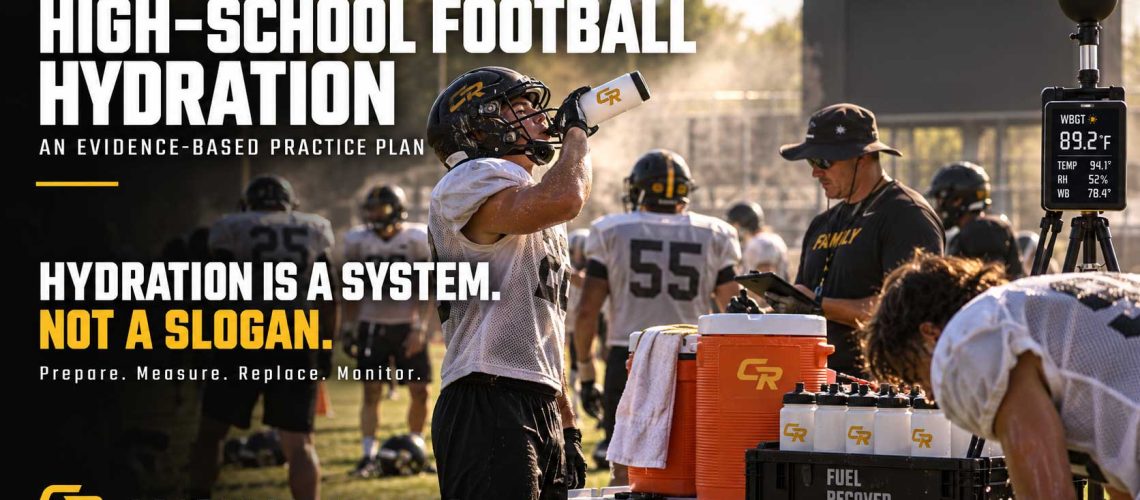

High-school football combines intense, intermittent exercise, protective equipment, large differences in body size, and late-summer heat. Football carries a disproportionate burden of exertional heat illness among high-school sports, with risk concentrated in preseason and early practices (Kerr et al., 2016; Kerr et al., 2013; Cooper et al., 2021).
Hydration matters, but “drink as much as possible” is not safe advice. Instead, the goal is to begin practice normally hydrated, limit excessive fluid loss, and avoid drinking more than the athlete loses. Because hydration is only one part of heat safety, it must support heat acclimatization, on-site environmental monitoring, planned rest breaks, equipment modifications, medical coverage, and a rehearsed emergency action plan (Casa et al., 2015; McDermott et al., 2017).
Important: This guide does not replace the school’s athletic trainer, team physician, emergency action plan, or state athletic association requirements. If athletes have medical conditions, prescribed fluid or sodium restrictions, kidney or heart disease, or a history of heat illness, get an individualized medical plan.
The five essentials
- Start normally hydrated. Use normal meals and beverages throughout the day; add a measured pre-practice amount when needed.
- Make fluids freely available. Give athletes access during planned breaks and when needed, not only after symptoms appear.
- Individualize the amount. Estimate fluid losses during real practices instead of giving the same ounces to every player.
- Finish below 2% body-mass loss without gaining weight. If weight increases during practice, look for overdrinking.
- Treat heat stroke as a cooling emergency. If confusion, collapse, irrational behavior, loss of balance, seizure, or altered consciousness appears during heat exposure, act immediately and cool the whole body rapidly.
Before practice
Normal daily intake provides the foundation. For adolescents ages 14–18, the National Academies’ adequate intake is 3.3 L/day of total water for boys and 2.3 L/day for girls. Total water includes beverages and water in food; these are population reference values, not football-specific drinking prescriptions (National Academies).
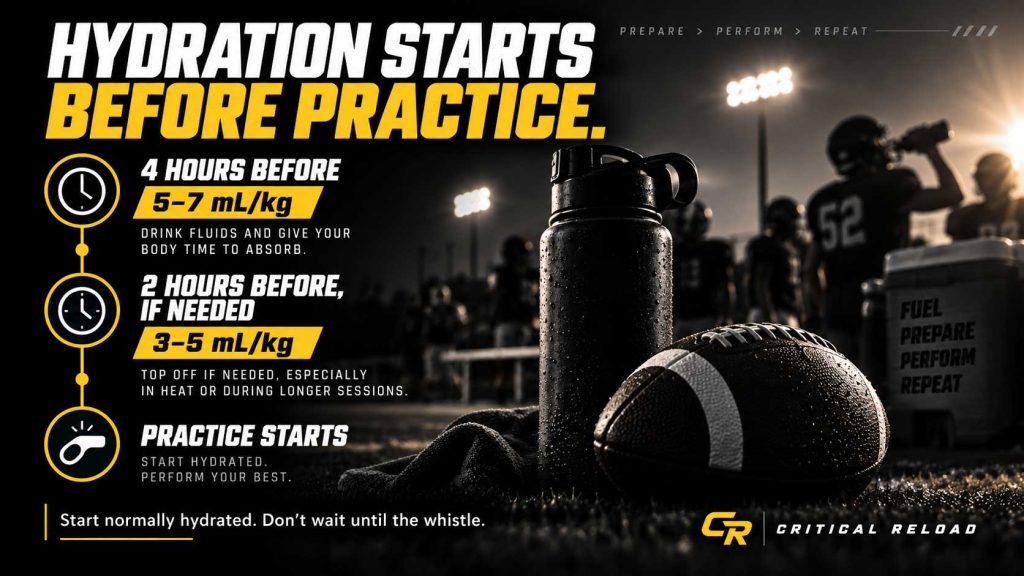
For athletes who may be underhydrated, use 5–7 mL/kg of fluid about four hours before exercise. If urine remains dark or scant, add another 3–5 mL/kg about two hours before. Adjust the amount for the athlete’s existing fluid deficit, gastrointestinal tolerance, and bathroom access (Sawka et al., 2007)
| 120 lb (54 kg) | 9–13 fl oz | 5–9 fl oz |
| 160 lb (73 kg) | 12–17 fl oz | 7–12 fl oz |
| 200 lb (91 kg) | 15–22 fl oz | 9–15 fl oz |
| 240 lb (109 kg) | 18–26 fl oz | 11–18 fl oz |
A normal meal or snack can supply carbohydrate and sodium without requiring a concentrated electrolyte product. Examples include a turkey sandwich and fruit, yogurt with granola, or pretzels with a peanut-butter sandwich.
During practice
No universal “ounces every 15 minutes” prescription fits every football player. Sweat rate varies with body size, position, workload, equipment, acclimatization, and weather. For context, adult professional-football research illustrates that variability: mean sweat rates differed by position group, while sweat-sodium concentration ranged widely among players (Godek et al., 2010). These adult data show the range of possible needs, but they should not be copied directly into prescriptions for teenagers.
Estimate sweat rate
Use a representative practice in the athlete’s normal equipment and environmental conditions:
Sweat loss (L) = pre-practice mass (kg) − post-practice mass (kg) + fluid consumed (L) − urine produced (L)
Sweat rate (L/h) = sweat loss (L) ÷ practice duration (h)
For this field calculation, treat 1 kg of acute body-mass change as approximately 1 L of water. Repeat the assessment in different conditions rather than treating one result as permanent (McDermott et al., 2017).
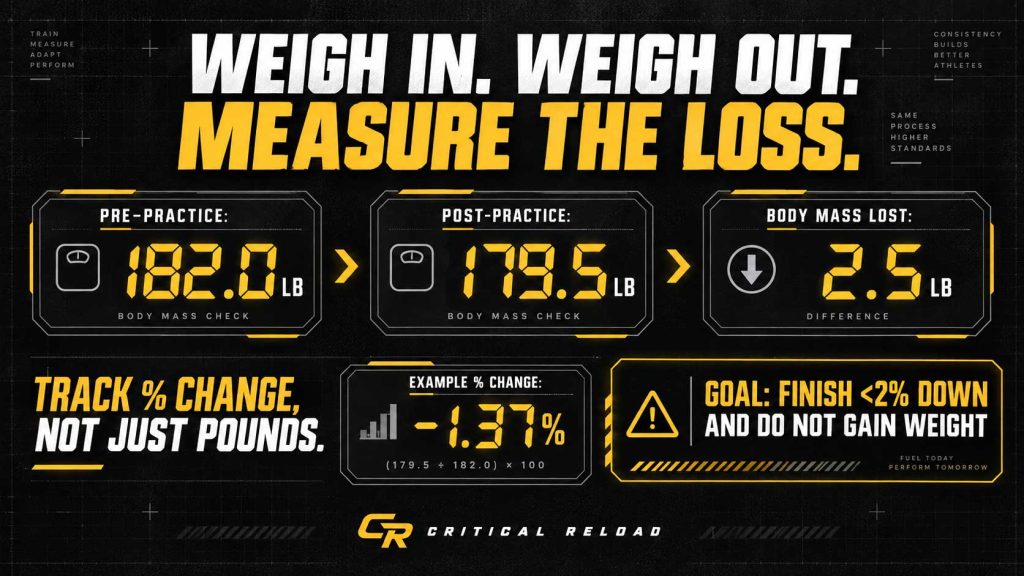
Track percentage change
Percent body-mass change = (pre-practice mass − post-practice mass) ÷ pre-practice mass × 100
Aim to finish with less than 2% body-mass loss and no weight gain. Avoid using a fixed one-pound cutoff: one pound represents a different percentage for a 120-pound athlete than for a 260-pound athlete.
If sweat rate is unknown, drink to thirst with frequent access to fluids as a safer default than forced drinking. Do not require any athlete to empty a bottle on a schedule that causes weight gain (McDermott et al., 2017).
Water or sports drink?
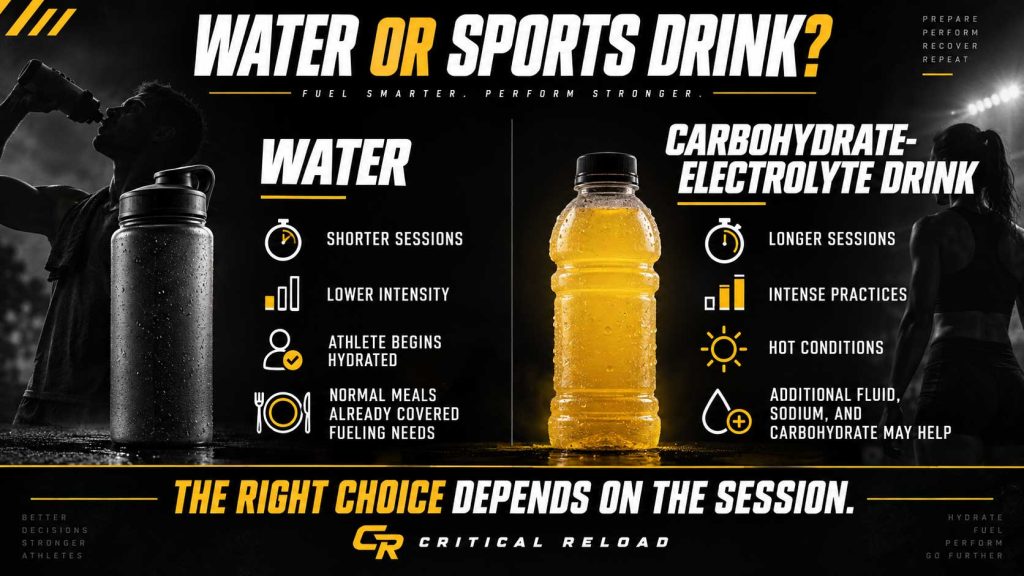
Use water for shorter, lower-intensity sessions when the athlete has eaten normally and begins hydrated. During longer, intense, or hot practices, use a carbohydrate-electrolyte drink because it supplies fluid, sodium, and carbohydrate and may improve palatability (Sawka et al., 2007).
This is not a brand contest. Product formulations change, and the right choice depends on measured losses, practice demands, diet, gastrointestinal tolerance, and preference. Compare current labels for:
- Serving size.
- Sodium per serving.
- Carbohydrate per serving.
- Caffeine or other stimulants.
- Mixing instructions.
Do not use routine high-dose sodium supplementation for every teenager. Replace likely losses without greatly exceeding them. If athletes have very high sweat rates, visible salt residue, recurrent problems despite a sound plan, or suspected unusually salty sweat, refer them to a sports dietitian, athletic trainer, or physician rather than self-prescribing salt packets (McDermott et al., 2017).
Prevent overdrinking
Sports drinks do not eliminate the risk of exercise-associated hyponatremia. Likewise, excess intake of water or other hypotonic drinks, including sports drinks, can lower blood sodium, particularly when body weight is maintained or increases during prolonged activity. Therefore, weight gain during practice is a signal to reassess and usually reduce fluid intake; it is not an automatic reason to add sodium (McDermott et al., 2017).
If progressive headache, vomiting, confusion, unusual behavior, swelling of the hands or feet, seizure, or collapse follows heavy fluid intake, seek urgent medical evaluation. Do not assume every symptomatic athlete is dehydrated or force more fluid.
After practice
When recovery time is short, replace 100%–150% of the remaining fluid deficit over the next several hours because some fluid will be lost in urine. When the next demanding session is more than 12 hours away, use normal food and fluid intake to restore balance without aggressive drinking (McDermott et al., 2017).
Replace each pound still lost after practice with approximately 16–24 fl oz over the recovery period, using 100%–150% of the deficit. Pair the fluid with a meal or snack containing sodium, carbohydrate, and protein.
Use milk or chocolate milk when convenient because they provide fluid, carbohydrate, protein, and electrolytes. Treat them as options, not mandatory or uniquely superior choices. Choose them when they fit the athlete’s recovery needs. A systematic review found broadly similar, or sometimes favorable, recovery outcomes compared with other drinks, while noting limited evidence quality (Amiri et al., 2019).
Cramps: use accurate language
Exercise-associated muscle cramps have no single proven cause. Instead, fatigue, neuromuscular overload, previous cramping, pacing or workload errors, heat, hydration status, and electrolyte losses may contribute differently among athletes. Therefore, reviews do not support saying dehydration or sodium loss is the universal cause (Schwellnus, 2009; Miller et al., 2022; Nelson and Churilla, 2016).
For an acute, typical cramp, stop activity.
- Gently stretch the affected muscle until the cramp eases.
- Evaluate workload, conditioning, acclimatization, fluid balance, food intake, illness, medications, and cramp history.
- Refer recurrent, severe, widespread, or atypical cramping for medical evaluation.
Energy drinks
Energy drinks are not sports drinks. In fact, the American Academy of Pediatrics’ peer-reviewed clinical report states that caffeine and other stimulant substances in energy drinks have no place in the diets of children and adolescents (AAP Committee on Nutrition and Council on Sports Medicine and Fitness, 2011).
Do not use an energy drink as a pre-practice hydration product. Instead, check labels for caffeine and other stimulants because products marketed for “energy,” “hydration,” and “performance” can look similar but serve different purposes.
Heat policy and WBGT
Measure wet-bulb globe temperature (WBGT) at the activity site, in the same sunlight, surface, and conditions the athletes experience, and keep monitoring it throughout the event (NFHS WBGT guidance).
Do not use one state’s threshold table as a universal national rule. Use WBGT thresholds that fit the climate category, and follow any state-association requirements. Ohio programs should follow current OHSAA requirements, the school’s written heat policy, and medical direction. Programs elsewhere should use their applicable state-association policy.
Every heat policy should include:
- Gradual heat acclimatization and equipment progression.
- On-site WBGT monitoring and documented work-to-rest modifications.
- Free access to fluids during breaks.
- A shaded or cooled recovery area.
- Cold-water immersion equipment ready before high-risk practices.
- A venue-specific emergency action plan rehearsed with coaches, athletic trainers, and EMS.
Emergency signs
Suspect exertional heat stroke when an athlete exercising in the heat develops central nervous system dysfunction, including confusion, irrational behavior, loss of balance, collapse, seizure, or loss of consciousness. In these cases, trained medical personnel should diagnose exertional heat stroke using rectal temperature; oral, ear, forehead, and temporal measurements are not reliable after intense exercise in the heat (Casa et al., 2015).
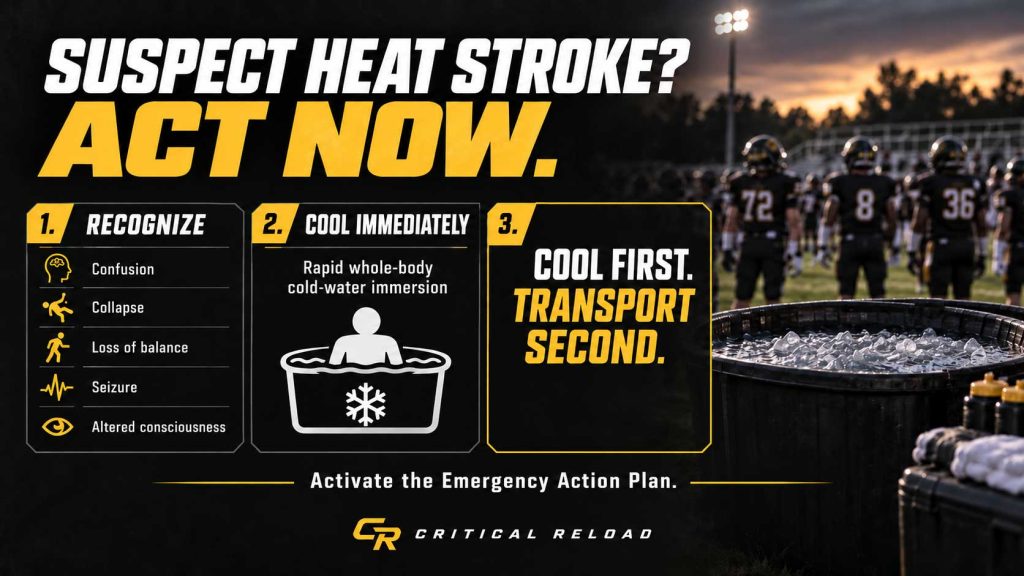
Activate the emergency action plan and begin rapid whole-body cold-water immersion immediately. The priority is to reduce core temperature below 102°F as quickly as possible, preferably within 30 minutes of collapse. When qualified medical personnel and appropriate equipment are present, the standard is to cool first, then transport (Casa et al., 2015; Adams et al., 2021).
Parent checklist
- Refillable water bottle and, when the session warrants it, a carbohydrate-electrolyte drink.
- Normal pre-practice meal or snack with carbohydrate and some sodium.
- Dry clothing for consistent before/after body-mass checks.
- Recovery food and fluid for the ride home.
- A current list of medications and relevant medical history.
- The athletic trainer’s contact information and the location of the school’s heat policy.
Coach checklist
- Measure WBGT at the field and continue monitoring it.
- Schedule breaks and allow access to fluids between them.
- Modify duration, intensity, and equipment according to the applicable policy.
- Track percentage body-mass change only when privacy, qualified supervision, and a reliable baseline are in place.
- Never use exercise as punishment or withhold water.
- Prepare cold-water immersion before high-risk practices.
- Rehearse the emergency action plan with medical staff and EMS.
Editorial review schedule
Review this article at least annually and whenever NATA, ACSM, NFHS, OHSAA, or the applicable state association changes its guidance. Verify product-specific nutrition information using current labels on the date of publication rather than copying it from third-party comparison sites.
Last evidence review: September 20, 2026.
References
- Amiri, M., Ghiasvand, R., Kaviani, M., Forbes, S. C., & Salehi-Abargouei, A. (2019). Chocolate milk for recovery from exercise: A systematic review and meta-analysis of controlled clinical trials. European Journal of Clinical Nutrition, 73(6), 835–849. https://doi.org/10.1038/s41430-018-0187-x
- Casa, D. J., DeMartini, J. K., Bergeron, M. F., Csillan, D., Eichner, E. R., Lopez, R. M., Ferrara, M. S., Miller, K. C., O’Connor, F., Sawka, M. N., & Yeargin, S. W. (2015). National Athletic Trainers’ Association position statement: Exertional heat illnesses. Journal of Athletic Training, 50(9), 986–1000. https://doi.org/10.4085/1062-6050-50.9.07
- Cates, J., & Rheeling, J. D. (2023, April 13). Wet bulb globe temperature (WBGT): Why should your school be using it?National Federation of State High School Associations. https://nfhs.org/stories/wet-bulb-globe-temperature-wbgt-why-should-your-school-be-using-it
- Committee on Nutrition & Council on Sports Medicine and Fitness. (2011). Sports drinks and energy drinks for children and adolescents: Are they appropriate? Pediatrics, 127(6), 1182–1189. https://doi.org/10.1542/peds.2011-0965
- Godek, S. F., Peduzzi, C., Burkholder, R., Condon, S., Dorshimer, G., & Bartolozzi, A. R. (2010). Sweat rates, sweat sodium concentrations, and sodium losses in 3 groups of professional football players. Journal of Athletic Training, 45(4), 364–371. https://doi.org/10.4085/1062-6050-45.4.364
- Institute of Medicine. (2005). Dietary reference intakes for water, potassium, sodium, chloride, and sulfate. The National Academies Press. https://doi.org/10.17226/10925
- Kerr, Z. Y., Casa, D. J., Marshall, S. W., & Comstock, R. D. (2013). Epidemiology of exertional heat illness among U.S. high school athletes. American Journal of Preventive Medicine, 44(1), 8–14. https://doi.org/10.1016/j.amepre.2012.09.058
- McDermott, B. P., Anderson, S. A., Armstrong, L. E., Casa, D. J., Cheuvront, S. N., Cooper, L., Kenney, W. L., O’Connor, F. G., & Roberts, W. O. (2017). National Athletic Trainers’ Association position statement: Fluid replacement for the physically active. Journal of Athletic Training, 52(9), 877–895. https://doi.org/10.4085/1062-6050-52.9.02
- Miller, K. C., Casa, D. J., Adams, W. M., Hosokawa, Y., Cates, J., Emrich, C., Fitzpatrick, T., Hopper, M., Jardine, J. F., LaBotz, M., Lopez, R. M., O’Connor, F., & Smith, M. S. (2021). Roundtable on preseason heat safety in secondary school athletics: Prehospital care of patients with exertional heat stroke. Journal of Athletic Training, 56(4), 372–382. https://doi.org/10.4085/1062-6050-0173.20
- Miller, K. C., McDermott, B. P., Yeargin, S. W., Fiol, A., & Schwellnus, M. P. (2022). An evidence-based review of the pathophysiology, treatment, and prevention of exercise-associated muscle cramps. Journal of Athletic Training, 57(1), 5–15. https://doi.org/10.4085/1062-6050-0696.20
- Nelson, N. L., & Churilla, J. R. (2016). A narrative review of exercise-associated muscle cramps: Factors that contribute to neuromuscular fatigue and management implications. Muscle & Nerve, 54(2), 177–185. https://doi.org/10.1002/mus.25176
- Sawka, M. N., Burke, L. M., Eichner, E. R., Maughan, R. J., Montain, S. J., & Stachenfeld, N. S. (2007). American College of Sports Medicine position stand: Exercise and fluid replacement. Medicine & Science in Sports & Exercise, 39(2), 377–390. https://doi.org/10.1249/mss.0b013e31802ca597
- Schwellnus, M. P. (2009). Cause of exercise associated muscle cramps (EAMC): Altered neuromuscular control, dehydration or electrolyte depletion? British Journal of Sports Medicine, 43(6), 401–408. https://doi.org/10.1136/bjsm.2008.050401
- Tripp, B. L., Winkelmann, Z. K., Eberman, L. E., & Smith, M. S. (2021). Factors affecting incidence rate of exertional heat illnesses: Analysis of 6 years of high school football practices in North Central Florida. Orthopaedic Journal of Sports Medicine, 9(9), 23259671211026627. https://doi.org/10.1177/23259671211026627
- Yeargin, S. W., Kerr, Z. Y., Casa, D. J., Djoko, A., Hayden, R., Parsons, J. T., & Dompier, T. P. (2016). Epidemiology of exertional heat illnesses in youth, high school, and college football. Medicine & Science in Sports & Exercise, 48(8), 1523–1529. https://doi.org/10.1249/MSS.0000000000000934