



When athletes are training hard, they meticulously plan their meals to fuel performance. However, many of them are left wondering what to eat on a rest day and whether eating less is actually better. It is a common assumption that rest days require you to cut caloric intake significantly. Sports nutrition experts emphasize that your body is not doing nothing during this phase, because recovery is also a crucial part of the process. So, slashing intake during rest days is not a good idea. In this article, we will explore why rest days are important and how you should change your nutrition plan during these days to ensure optimal recovery.
Why Rest Days Matter for Athletes
Rest days are often overlooked in an athlete’s routine, but they play an important role in recovery and overall performance in the upcoming days. These allow the body to repair tissues, replenish energy levels, and prepare it for the stress of training. Proper nutrition during these days ensures that your recovery becomes truly effective and supports your long-term performance and progress.
Are Rest Days Important for Muscle Growth?
For athletes, muscle recovery and growth are crucial, and they happen only when you are resting properly. During training, micro-tears often occur in your muscle fibers, and repairing these takes time. On your rest days, you need to consume optimum amounts of protein to initiate the process of muscle protein synthesis. You also need to balance this with the right carbohydrate intake to:
- Optimize recovery
- Reduce muscle soreness
- Support long-term performance
Rest and nutrition work hand in hand, which means skipping or neglecting any one of these can hinder your progress.
Are Rest Days Important for Weight Loss?
If you are an athlete who needs to focus on weight management, rest days are equally important. While it is easy to assume that eating less on a rest day will contribute to fat loss, this isn’t entirely true. Your body’s metabolism depends on your energy intake and activity levels, which means overly restricting caloric intake can lead to fatigue, loss of muscle mass, and slower metabolism. This makes it difficult for you to lose weight.
Should I Eat Less on Rest Days?
It is a common question among athletes: Should I eat less on rest days? Of course, it seems logical to reduce your food intake when you are not training, but you need to give your body the energy it needs to recover properly. Rather than focusing on eating less, you should aim to adjust your nutrition smartly. You should see rest day nutrition as an opportunity to balance calories and nutrients to optimize recovery.
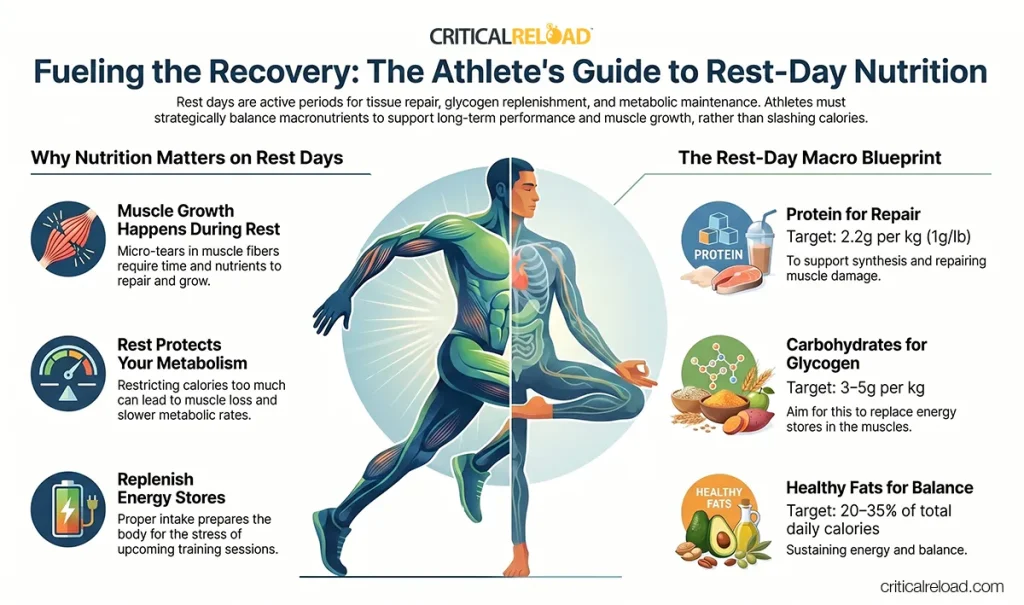
The next question you may have is: what to eat on rest days to build muscle and recover effectively? Let us find out:
- Proteins:
Protein is an important component of your diet because it contributes to repairing muscles that are damaged during a workout. Experts recommend consuming 1 gram of protein per pound of body weight, which means your protein intake should be equal to 2.2 g multiplied by your body weight in kg.
Some excellent sources of protein are:
- Fish
- Nuts
- Beans
- Seeds
- Poultry
- Dairy products
- Soy
- Tofu
- Carbohydrates:
Carbs also help in muscle recovery because of their ability to replace glycogen stores and provide more energy to your muscles. Depending on your activity levels, you need to consume anywhere between 3 and 5 grams of carbs per kg of your body weight. If your aim is fat loss, you should consider lowering your carb intake.
Some excellent sources of carbohydrates are:
- Vegetables
- Whole grains
- Beans
- Rice
- Fruits
- Oats
- Fats:
Athletes may want to lower their fat intake on rest days because they will be less active, or see this as a cheat day and increase their fat intake. It is important that you understand the difference between healthy fats and unhealthy fats. Healthy fats are an integral part of a balanced diet, and should cover 20-35% of your total calorie intake.
Some excellent sources of healthy fats are:
- Nuts
- Avocados
- Olive oil
On the contrary, cookies, cakes, and chips contain unhealthy fats.
Protein Shakes and Supplements: Are They Essential on Rest Days?
When an athlete thinks about what to eat on a rest day, one more question that comes to mind is whether protein shakes and supplements should be consumed. If you are finding it difficult to meet the daily intake requirements, it is a good idea to turn to these options. However, you must make sure that these products are not high in calories or sugar.
Conclusion
Rest is a vital part of your progress as an athlete, whether your goal is muscle growth, fat loss, or long-term performance. Knowing what to eat on a rest day makes a meaningful difference for you. For the best results, you should focus on making smart adjustments to your meal plan rather than drastically cutting calories. With the right nutrient-dense foods, you can support recovery, sustain metabolism, and prepare your body for the next training session or game day.
If you’re serious about improving recovery on rest days, discover how Critical Reload Recovery Shakesand our Nutrition Education System help athletes implement fueling strategies that actually support performance fueling strategies that actually support performance.